What High School Students' Opinions on Remote Work Mean For Your College
High school students prefer hybrid work and are using that expectation to evaluate colleges. What their views on remote work mean for enrollment strategy.

When high school students imagine their future careers, they're not picturing corner offices or fully remote setups. They're envisioning something far more nuanced: a work environment that blends in-person collaboration with flexible remote days, another signal from students that they want more agency over their day-to-day schedule. These visions of ideal work environments have profound implications for how students are evaluating colleges today.
The Career Aspiration That’s Reshaping College Choice
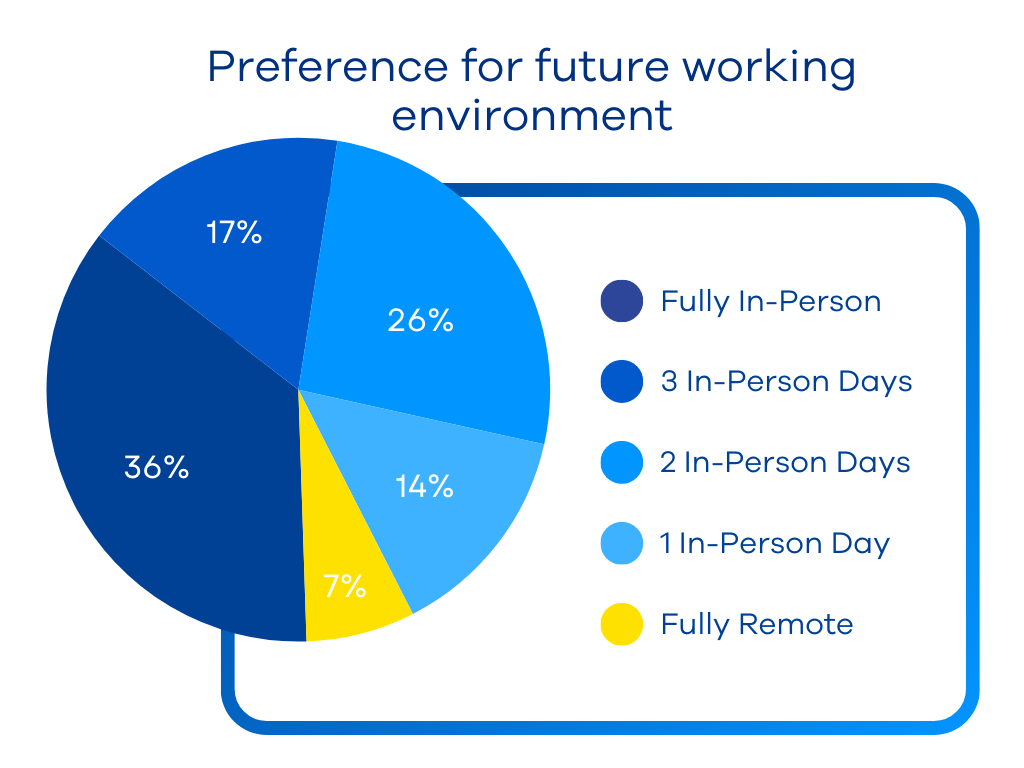
Our recent survey of over 1,500 high school and undergraduate students produced a wealth of insights, some of which didn’t make it into our Hybrid College Wins report, but are no less revealing. When asked which type of work they would most prefer, 57% of high school students want hybrid work. Only 36% want fully in-person roles, and most notably only 7% of students would prefer completely remote positions.
These aren’t just casual preferences, they represent a generation’s reimagining of their professional life and they’re using these expectations to evaluate whether colleges are preparing them for the careers they actually want.
More so than ever, students are viewing their college education as career preparation and not just an acquisition of credits. Given the state of the current job market, students want to align their college experiences as closely as possible to working conditions. When they are assessing colleges, they’re asking: Will this institution equip me for the workforce I’m planning to enter? For most, that workplace is hybrid and institutions that are stagnant in their ability to offer online programs or hybrid programs are signaling misalignment with student career trajectories.
The Hybrid Sweet Spot Extends Beyond the Workplace
What makes this data particularly interesting is the consistency between student’s work preferences and their learning preferences. Among high school students, the majority (57%) want to work in a hybrid work environment, which aligns with the majority of responses of high school students saying they want to take at least two online courses per semester (76%). However, students are equally clear about their limits in both the workplace and in the classroom with only 7% of students wanting fully remote work, and 17% of students wanting more than 3 courses per semester online.
Students aren’t rejecting in-person connection or collaboration; they’re optimizing for balance, autonomy, and control over how they structure their time. This mirrors what we’re seeing in the professional world. Hybrid work models have become the norm precisely because they balance organizational needs for collaboration with individual needs for focused work time and life integration. Students recognize this reality and expect their choice of college to reflect it.
The Skills Gap Traditional Programs Don’t Address
Hybrid work environments require a distinct skill set that goes beyond traditional academic content mastery. Professionals in hybrid roles must excel at asynchronous communication. They need to be well versed in self-management capabilities to structure their own time, meet deadlines without direct supervision, and maintain productivity across different environments. And most importantly, they must navigate digital collaboration tools effectively, know when synchronous meetings add value versus when async updates suffice, and build relationships and trust remotely as readily as across a desk or conference table.
Here’s what's worth considering: traditional fully in-person courses don’t systematically build these capabilities into the student experience. A student who attends every class in person completes group work in the library, and meets professors during office hours may graduate with strong content knowledge and in-person collaboration skills, but with limited practice in the modalities that hybrid work demands.
This isn’t to suggest that students from fully in-person programs can’t adapt to hybrid work. But students who build these skills during college enter the workforce with fluency, not catch-up. They’ve already practiced asynchronous communication, self-directed time management, and digital collaboration, advantages their peers may still be developing in their first roles.
Potential Enrollment Consequences
When colleges offer only fully in-person programs or fully online degrees, they may inadvertently signal to students that they’re only preparing them for work environments most don’t expect to enter. Students who’ve grown up with seamlessly integrated digital tools often interpret this approach not as maintaining academic standards, but as a disconnect from the professional world they’re planning to navigate.
Institutions offering hybrid programs communicate something different. We recognize the workplace you’re preparing for, and we’re thoughtfully building the skills you’ll need to succeed in it. This isn’t about making college easier or more convenient, it’s about making it more aligned with career preparation and opportunities.
It's also worth noting that these expectations will likely intensify with each incoming class. The students you'll recruit next year will arrive with more experience in hybrid learning models, greater comfort with digital collaboration, and increasingly clear expectations that their education should reflect their career preparation needs. Understanding this trajectory now can help institutions stay ahead of shifting student expectations rather than responding to them reactively.
The Complete Research
Students' work environment preferences reveal one dimension of a much larger transformation in how they evaluate institutions. Our comprehensive research in The Hybrid College Wins: What Students Are Telling Us That Schools Ignore examines the full scope of student expectations, from the gap between what they want and what colleges currently offer, to the competitive advantages hybrid programs create, to strategic implementation pathways.
Download the full report here to discover what today's students are really asking for and how your institution can deliver it.

Kevin is passionate about working at Rize because he believes students should not have to choose between a rich residential college experience and earning a degree that equips them with essential career skills. Outside of work, he enjoys golfing, skiing, listening to podcasts while walking around NYC, and spending summers with family and friends in Cape Cod.
What High School Students' Opinions on Remote Work Mean For Your College
High school students prefer hybrid work and are using that expectation to evaluate colleges. What their views on remote work mean for enrollment strategy.
When high school students imagine their future careers, they're not picturing corner offices or fully remote setups. They're envisioning something far more nuanced: a work environment that blends in-person collaboration with flexible remote days, another signal from students that they want more agency over their day-to-day schedule. These visions of ideal work environments have profound implications for how students are evaluating colleges today.
The Career Aspiration That’s Reshaping College Choice
Our recent survey of over 1,500 high school and undergraduate students produced a wealth of insights, some of which didn’t make it into our Hybrid College Wins report, but are no less revealing. When asked which type of work they would most prefer, 57% of high school students want hybrid work. Only 36% want fully in-person roles, and most notably only 7% of students would prefer completely remote positions.
These aren’t just casual preferences, they represent a generation’s reimagining of their professional life and they’re using these expectations to evaluate whether colleges are preparing them for the careers they actually want.
More so than ever, students are viewing their college education as career preparation and not just an acquisition of credits. Given the state of the current job market, students want to align their college experiences as closely as possible to working conditions. When they are assessing colleges, they’re asking: Will this institution equip me for the workforce I’m planning to enter? For most, that workplace is hybrid and institutions that are stagnant in their ability to offer online programs or hybrid programs are signaling misalignment with student career trajectories.
The Hybrid Sweet Spot Extends Beyond the Workplace
What makes this data particularly interesting is the consistency between student’s work preferences and their learning preferences. Among high school students, the majority (57%) want to work in a hybrid work environment, which aligns with the majority of responses of high school students saying they want to take at least two online courses per semester (76%). However, students are equally clear about their limits in both the workplace and in the classroom with only 7% of students wanting fully remote work, and 17% of students wanting more than 3 courses per semester online.
Students aren’t rejecting in-person connection or collaboration; they’re optimizing for balance, autonomy, and control over how they structure their time. This mirrors what we’re seeing in the professional world. Hybrid work models have become the norm precisely because they balance organizational needs for collaboration with individual needs for focused work time and life integration. Students recognize this reality and expect their choice of college to reflect it.
The Skills Gap Traditional Programs Don’t Address
Hybrid work environments require a distinct skill set that goes beyond traditional academic content mastery. Professionals in hybrid roles must excel at asynchronous communication. They need to be well versed in self-management capabilities to structure their own time, meet deadlines without direct supervision, and maintain productivity across different environments. And most importantly, they must navigate digital collaboration tools effectively, know when synchronous meetings add value versus when async updates suffice, and build relationships and trust remotely as readily as across a desk or conference table.
Here’s what's worth considering: traditional fully in-person courses don’t systematically build these capabilities into the student experience. A student who attends every class in person completes group work in the library, and meets professors during office hours may graduate with strong content knowledge and in-person collaboration skills, but with limited practice in the modalities that hybrid work demands.
This isn’t to suggest that students from fully in-person programs can’t adapt to hybrid work. But students who build these skills during college enter the workforce with fluency, not catch-up. They’ve already practiced asynchronous communication, self-directed time management, and digital collaboration, advantages their peers may still be developing in their first roles.
Potential Enrollment Consequences
When colleges offer only fully in-person programs or fully online degrees, they may inadvertently signal to students that they’re only preparing them for work environments most don’t expect to enter. Students who’ve grown up with seamlessly integrated digital tools often interpret this approach not as maintaining academic standards, but as a disconnect from the professional world they’re planning to navigate.
Institutions offering hybrid programs communicate something different. We recognize the workplace you’re preparing for, and we’re thoughtfully building the skills you’ll need to succeed in it. This isn’t about making college easier or more convenient, it’s about making it more aligned with career preparation and opportunities.
It's also worth noting that these expectations will likely intensify with each incoming class. The students you'll recruit next year will arrive with more experience in hybrid learning models, greater comfort with digital collaboration, and increasingly clear expectations that their education should reflect their career preparation needs. Understanding this trajectory now can help institutions stay ahead of shifting student expectations rather than responding to them reactively.
The Complete Research
Students' work environment preferences reveal one dimension of a much larger transformation in how they evaluate institutions. Our comprehensive research in The Hybrid College Wins: What Students Are Telling Us That Schools Ignore examines the full scope of student expectations, from the gap between what they want and what colleges currently offer, to the competitive advantages hybrid programs create, to strategic implementation pathways.
Download the full report here to discover what today's students are really asking for and how your institution can deliver it.
Kevin is passionate about working at Rize because he believes students should not have to choose between a rich residential college experience and earning a degree that equips them with essential career skills. Outside of work, he enjoys golfing, skiing, listening to podcasts while walking around NYC, and spending summers with family and friends in Cape Cod.